
AdPriva ID App
Finally, an app built for you, not to track you.
The AdPriva ID App is your private vault for preferences and consent. It keeps you in control, recording every interaction as a verifiable, consent-based proof you can review.
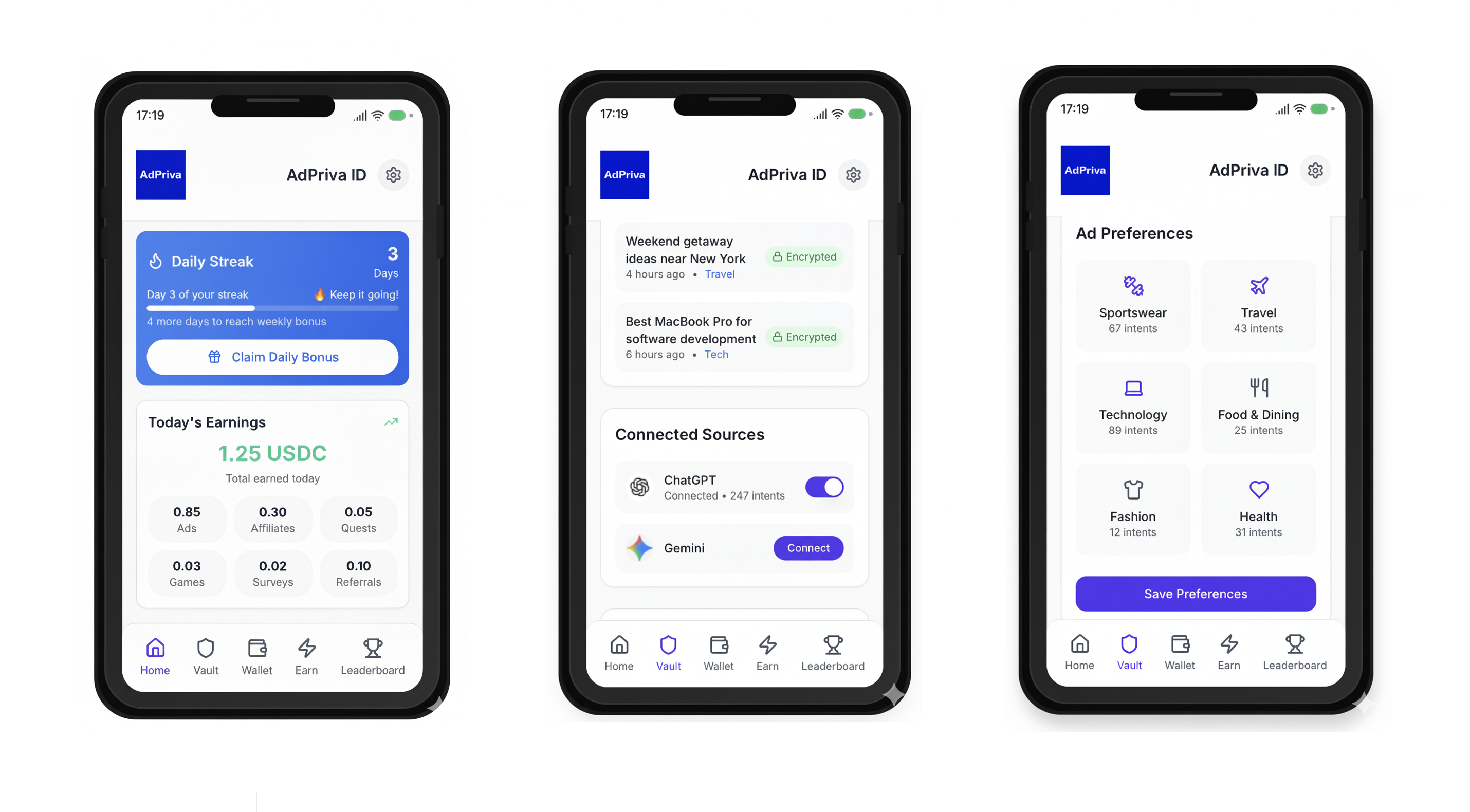
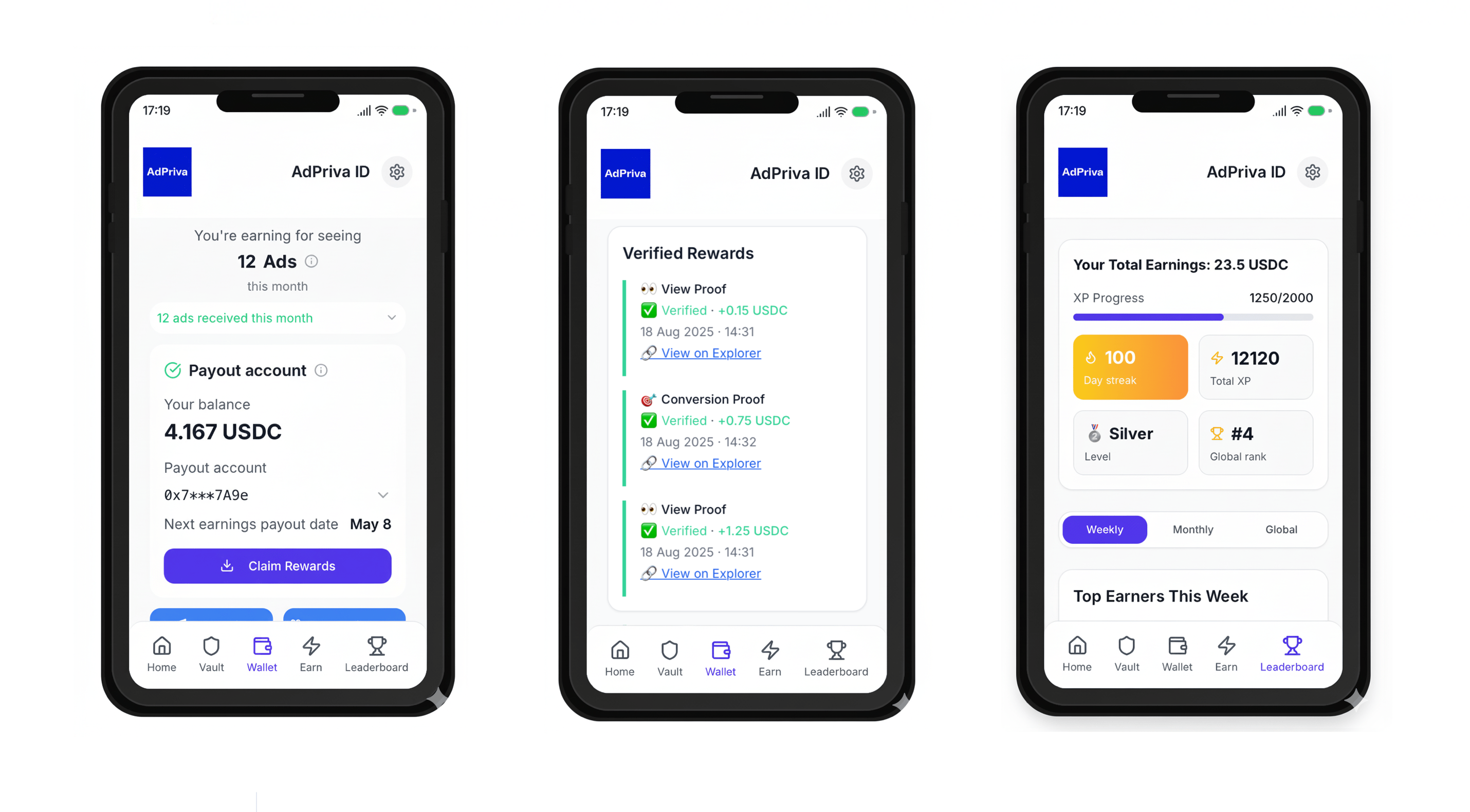
Key Roles of the ID App
- Data Vault → Your preferences and consent choices stay securely on your device.
- Consent Manager → You explicitly opt in or out of categories, with every change stored as a verifiable Consent Receipt.
- Engagement Verifier → Confirms genuine human interaction, generating a signed Engagement Proof.
- Proof History → A transparent record of every proof you generate, each linked to the Explorer.
How It Works
- Install → Available on iOS & Android.
- Setup → Select your interests (e.g., sports, fashion, tech).
- Interact → As you browse, genuine interactions generate signed Engagement Proofs.
- Review → Track your proofs and Consent Receipts, each verifiable in the Explorer.
Privacy by Design
- No cookies or fingerprinting → Preferences are stored only in the ID App.
- Zero-knowledge proofs (coming soon) → Engagements verified without exposing raw user data.
- User-side control → The ID App is the only place where identity and preferences are linked.
What Users See
- Home Screen → Overview of your recent interactions and the proofs they generated.
- Preferences → Toggle content categories on/off anytime.
- Proof History → Transparent list of your proofs with verification links.
Connections
- Publishers → Receive proof of genuine, consent-based engagement, never your identity.
- Auditors & Regulators → Independently verify every proof in the Explorer.
Roadmap Features
- On-device ZK proofs → Engagement proofs generated without server calls.
- Consent portability → Preferences portable across devices via encrypted sync, without exposing identity.
- Plugin ecosystem → Integrations with privacy, identity and consent-management tools.
The AdPriva ID App isn’t just another app, it’s the foundation of digital trust. It puts you in control of your consent and gives you a verifiable record of every interaction.